|
|
|
Happy Friday!
September 4, 2026
|
|
|
 |
|
|
|
On behalf of the Virginia Alliance for Clean Energy (VACE), we are extending invites for the 2026 Virginia Clean Energy Summit (VACES), October 7–8, 2026, at the Greater Richmond Convention Center.
As the lead organizer of VACES, the Summit will be bringing together hundreds of leaders from Virginia’s energy industry, government, utilities, businesses, nonprofits, academia, and other sectors for two days of discussion and collaboration around the Commonwealth’s energy future.
This year’s Summit will address key issues including energy affordability, grid reliability, nuclear energy, energy storage, critical minerals, clean transportation, workforce development, transmission, emerging technologies, financing, and economic development.
VACES gives government leaders and staff the opportunity to hear from industry experts and community stakeholders, explore emerging technologies and market trends, and connect with organizations working across Virginia.
Complimentary registration is available to government officials and one staff member. Attend the full Summit or join us for the sessions most relevant to your work!
Register with complimentary government admission here. Full information on the event here and for any other questions please reach out to blayne.barras@va-ce.org.
|
|
|
|
|
|
Virginia’s Energy Report Card
|
 |
|
|
|
This week, the American Society of Civil Engineers (ASCE) released their 2026 report cards for Virginia’s infrastructure. In that report card, they gave Virginia’s energy system a D, which was the lowest of its 13 graded categories and sat below the D+ national average for energy. This may be news to some, but it is exactly the conversation that we at Energy Right are seeking to address. Dominion Energy’s CEO Robert Blue has said that the Company expects Virginia’s energy demand to double by 2039. With rising demand due to data centers, large manufacturing, and economic growth across the Commonwealth, Virginia is on the brink of an energy crisis, or if you ask some, already in one. Federal data backs this up—commercial electricity sales in Virginia increased by nearly 30 million megawatt-hours between 2019 and 2025, faster than any other state except Texas.
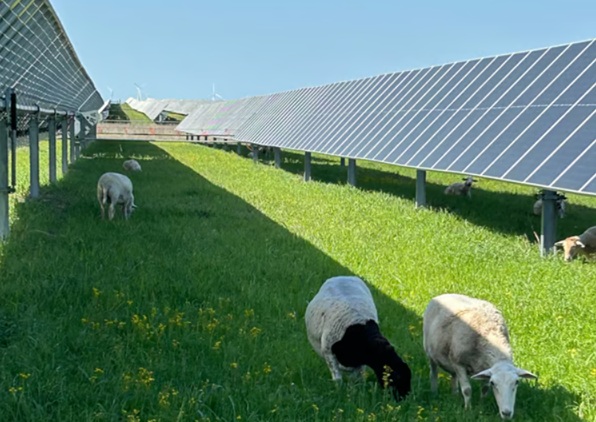
As Virginia remains the largest net importer of electricity, it’s past time that we need to examine how to address this concern and start building more energy generation here at home. Nearly a third of Virginia power is brought in from outside state borders, which should be alarming. The good news is that Virginia has options, and we don’t need to wait decades for new generation to come online. We should be pursuing an all-of-the-above approach to meeting our growing energy needs, with solar and battery storage leading the way. Solar can be deployed quicker than any other energy source, and battery storage can help make that energy available when demand is highest. Together, these resources can add new capacity to the grid on a timeline that matches the urgency of Virginia’s growing electricity demand.
Regardless of a grade on a report card, we should be trying to make sure Virginia has the reliable and affordable electricity necessary to support economic growth. Virginia’s counties and landowners have an important role to play in that effort. Responsible solar and storage development can provide new tax revenue to localities, create opportunities for landowners, and strengthen Virginia’s energy independence without waiting for a single large project to solve the problem. If Virginia wants to move from a D to a better grade, we need to start building—and solar and storage can help us do it now.
|
|
|
|
|
|
FROM THE ROAD
|
 |
|
|
|
This past Tuesday, the Energy Right team attended a community meeting regarding a utility scale solar project in Brunswick county. The project is just outside the community of Rawlings and sought input on a recent redesign to be less impactful on watersheds. It was a great showing with many neighbors, community members, and elected officials coming out to have their voices heard.
|
|
|
|
What We’re Thinking
|
 |
|
Energy to Oranges: A New Solar Conversation in Orange County
|
 |
|
|
|
Orange County offers an interesting example of how solar development can evolve when communities are willing to evaluate projects on their individual merits. A new community-scale solar proposal heading to public hearing is the county’s first solar application to reach this stage in several years—and it comes under a much different regulatory environment than the large-scale projects considered in the past.
Today, stronger DEQ requirements, decommissioning assurances, financial guarantees, and local project conditions provide additional safeguards for communities. Members of the Orange County Planning Commission have acknowledged these differences, emphasizing the importance of keeping an open mind and evaluating the project in front of them. That does not mean giving any project a rubber stamp. It means considering its location, environmental protections, financial commitments, community benefits, and potential impacts based on today’s standards.
As the public hearing approaches, previous large-scale developments should not automatically define this community-scale proposal. Good land-use decisions depend on understanding the project itself, the rules governing it, and the protections available today. Comparing projects developed years apart, at different scales, and under different requirements risks overlooking those distinctions.
Orange County’s approach shows why thoughtful development and meaningful community engagement matter. When developers bring forward quality projects, residents ask tough questions, and local officials evaluate the facts with an open mind, local control and responsible energy development can work together. Strong safeguards, careful siting, and genuine community input can move the conversation forward—and Orange County has an opportunity to demonstrate what that looks like.
|
|
|
|
|
|
|
|
|
|
|
|
Energy Right was in Brunswick, Cumberland, Essex, and Orange counties this week!
|
|
|
|
|
|
|
|
|
|
Calls for data center moratoriums are growing across Virginia, but the impacts could extend well beyond individual localities. Restricting development may ease local concerns around water, infrastructure, and land use, while potentially shifting projects—and their grid demand—to other states. The article highlights the difficult tradeoffs involved, including rural tax revenue and jobs, growing supply-chain investment, and the reality that Virginia remains connected to a regional electricity system facing rising demand.
|
|
|
|
|
What’s Next
|
|
|
|
NEXT WEEK
|
|
We’ll be going to Hampton Roads, Lunenburg, Orange, Page, and Southampton counties!
|
|
|
|
|
|
|