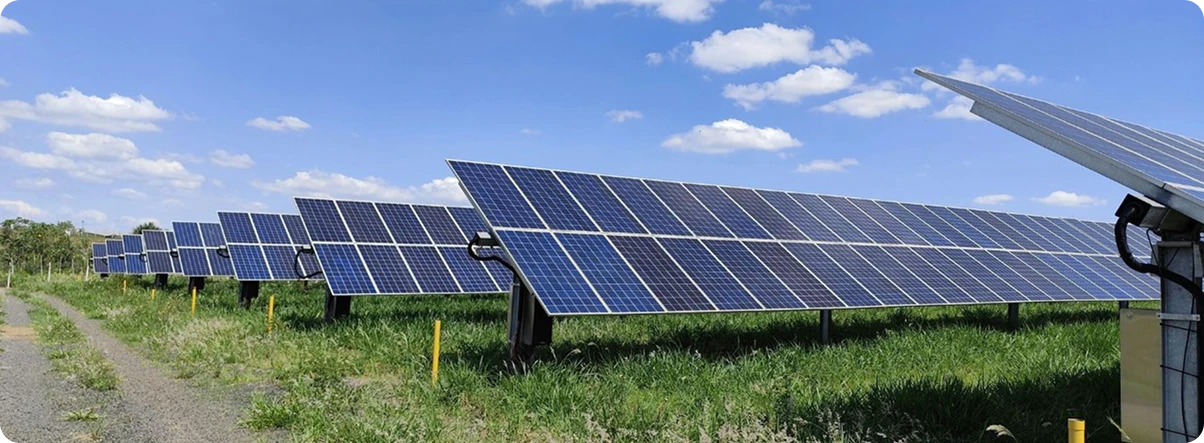
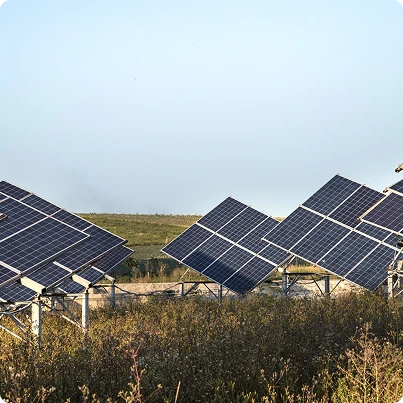
Utility-scale solar plants are large-scale power stations that use thousands of solar panels to generate electricity for the entire community. These projects are usually built on large, flat tracts of land where the panels are mounted on motorized racks that tilt to follow the sun from morning to night. The energy starts as DC power, which is converted to AC power by machines called inverters. This electricity is then sent through a substation to increase its voltage so it can travel long distances over high-voltage power lines.
Building these plants is a huge undertaking that starts with years of planning and environmental studies. Developers must get permission from local governments for land use and from state or federal agencies to ensure they aren’t harming local wildlife or water sources. They also need a special agreement with the power grid to prove they can safely plug in without causing blackouts. Once the permits are in hand, crews drive steel posts into the ground, snap the panels into place, and wire everything together to start feeding power to the grid.
If you are curious about how solar works, check out this explanation from the Department of Energy
Are you a member of a local government or curious about how local governments can improve solar development outcomes? This guidebook outlines how local governments can use plans, zoning regulations, and land-use decision-making processes to maximize local benefits and minimize tradeoffs associated with solar projects.
Want to learn more about rural communities and farmer impacts from solar energy? The Renewable Farmers of America publishes briefs on a number of topics important to rural communities such as local benefits, concerns about loss of farmland, and private property rights. They can be found here.
For more information on solar projects in Virginia and in your locality, please visit the Virginia Solar and Storage Database put together by the University of Virginia’s Weldon Cooper Center for Public Service. The database provides an inventory of large-scale solar projects and battery energy storage systems proposed for siting approval at the local level in Virginia.
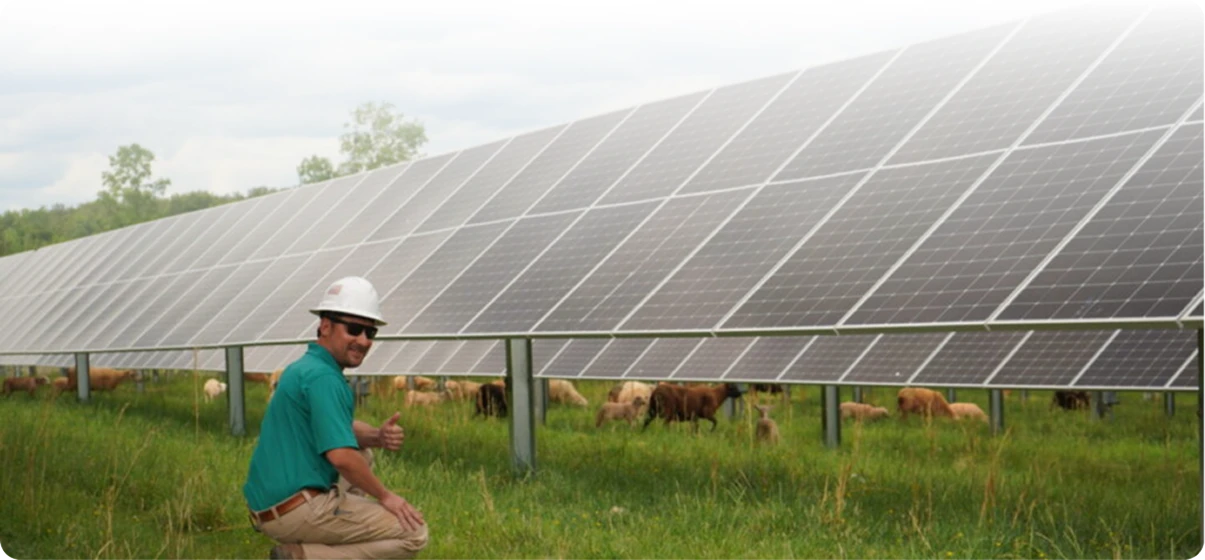
Many communities have concerns about the effects of solar development on their land. Farmers and ranchers know their land like the back of their hand, and when they want to diversify their operation with solar, we trust them to pursue these projects with the health of the land in mind.
Utility-scale solar turns large plots of land—often marginal farmland—into long-term energy producers with a relatively light footprint. Unlike permanent industrial sites, solar panels sit on racks that leave the soil largely undisturbed, allowing for dual-use options like “agrivoltaics,” where sheep graze, or native plants grow between the rows. This setup provides landowners with a steady, drought-proof income that is often more reliable than traditional crop cycles, all while supporting local biodiversity.
At the end of a typical 25-year lease, the land remains a versatile asset because the infrastructure is modular and mostly sits above ground. The landowner has the flexibility to have the equipment removed to restore the land for farming, or they can negotiate to keep the infrastructure in place to continue generating power or repurpose the site. Because the soil hasn’t been treated with heavy fertilizers or chemicals during the project’s life, it effectively “rests,” preserving or even improving its long-term agricultural value.
Whether the owner chooses to decommission the site to return to traditional crops or extend the lease for continued production, they maintain full control over the property’s future. This makes solar a low-risk, reversible land use that offers a guaranteed revenue stream.
The U.S. Photovoltaic Database provides the locations and array boundaries of U.S. utility-scale solar facilities 1 megawatt or larger; as of August 2026, it includes over 6,600 projects. Most solar projects tend to be located on agricultural land, largely because the same flat, cleared terrain with good drainage and access that makes land good for farming also makes it attractive for solar development. With that being said, however, the Solar Energy Industries Association’s (SEIA) 2026 Land Use and Solar Development report estimates current solar use at just 0.04% of total U.S. land and 0.07% of U.S. prime farmland.
In Virginia, the 2024 Re-Evaluating the Land Use Impacts of Utility-Scale Solar Energy Development in Virginia report found that the impacted land area of solar facilities averages 6.93 acres per MW (AC) and that the vast majority of solar is placed on former forest (50%) and cropland (28%) land cover classifications. Despite these numbers, solar in Virginia is equivalent to just 0.11% of the total land in Virginia.
Interested in learning about the balance of economic development and natural resources conservation? Check out the Virginia Land & Energy Navigator https://valen.ext.vt.edu/, a GIS tool related to prime farm and forestland, land conservation, brownfields, transmission lines, and other topics to support decision-making at the local level.
This video comes from the American Solar Grazers Association and highlights Marcus and Jess Gray of Gray's Lambscaping, a Virginia-based company using sheep grazing for vegetation management at local solar facilities.
A portion of the new 2026 legislation in Virginia focuses on decommissioning guidance, and what occurs towards the end of a solar facility’s useful life; that guidance can be found here.
Within the state guidance, it highlights that a decommissioning plan must include removing equipment from the property and returning the land to a useful condition similar to the preconstruction condition, unless otherwise agreed to by the landowner.
After the decommissioning process is complete, the facility shall comply with all stormwater provisions in state law. An important note on this process is decommissioning bonds. Decommissioning bonds are financial guarantees that ensure a project developer/owner safely removes infrastructure and restores the land. In 2022, the University of Virginia released a report titled Decommissioning Utility-Scale Solar Facilities: Financial Best Practices for Virginia Localities which analyzes existing state and local laws, recommendations from state and federal agencies, and approaches in comparable markets to present an inventory of decommissioning best practices for VA localities hosting solar facilities. Many model ordinances include a decommissioning bond installment structure and third-party calculation requirement to ensure financial guarantees for the county.
When a solar facility reaches the end of its life, we often hear questions about the recyclability of the panels and the potential to return the land to its previous condition. Information on recycling solar panels and land stewardship can be found below.
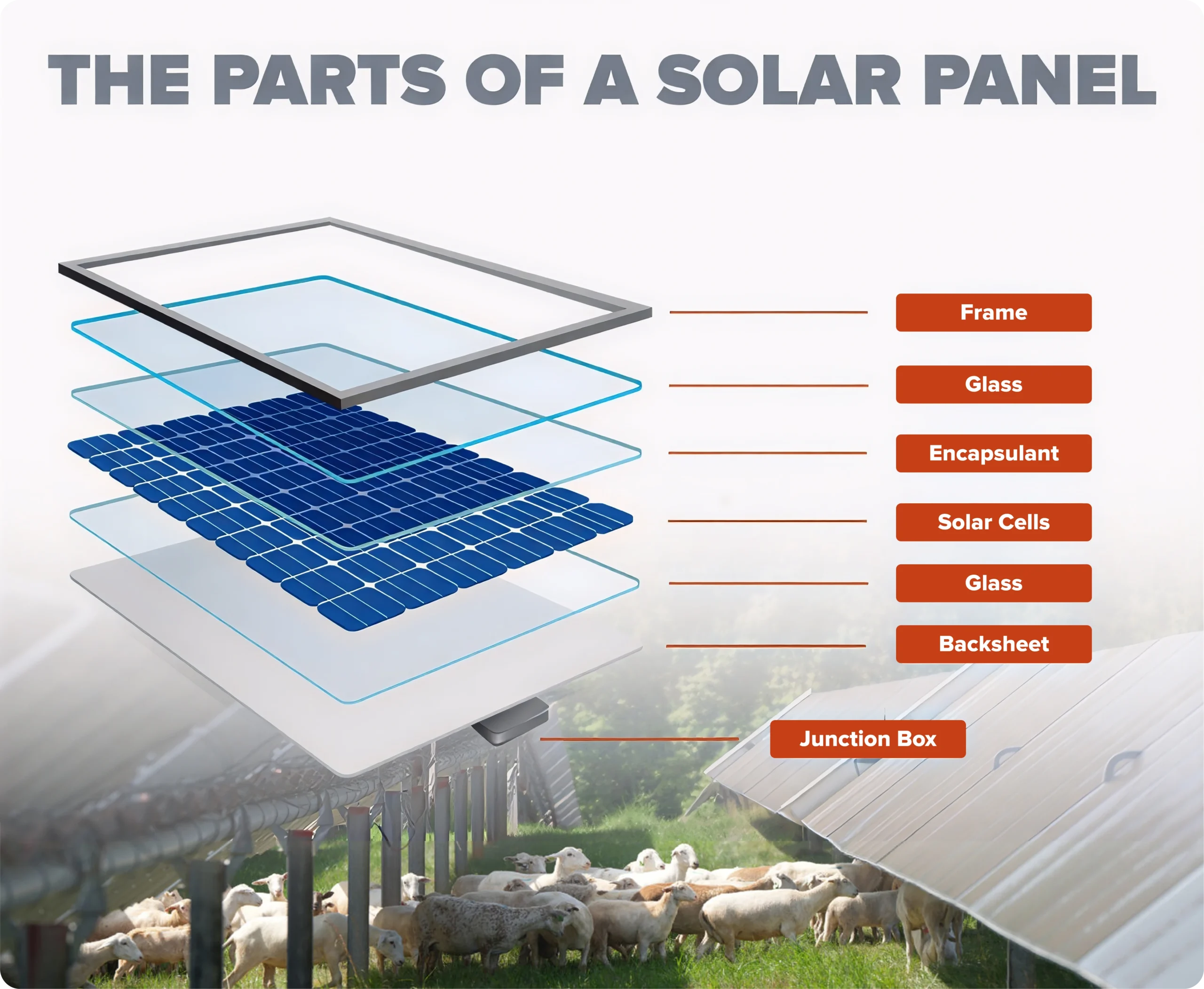
The complexity of recycling solar panels can vary depending on the materials they contain. By weight, glass makes up about 75 percent of a typical panel, and the aluminum frame accounts for roughly another 10 percent – both materials with established recycling streams and existing infrastructure. Copper wiring and the plastic junction box are also considered straightforward to recover using existing metals and electronics recycling processes. Other materials, however, are harder to recycle. Silicon solar cells make up a small share of a panel’s total weight but require separating the glass-encapsulant before the silicon can be recovered and re-purified for reuse. Lead and cadmium are used in some panels, which are regulated as hazardous materials and require specialized handling; however, after a project’s useful life, they can be recycled.
A solar system includes components beyond the panels themselves, several of which are also recyclable: inverters can typically be recycled with electronic waste, racking can be recycled with similar scrap metals, and battery-based grid energy storage systems can be handled through existing battery recycling programs. In recent years, solar panel recycling facilities have expanded in the U.S., and the economic case for more facilities is growing. By 2050, the market value of materials recoverable from end-of-life panels globally could reach $15 billion, with roughly half of that value coming from aluminum and about a third from silver.
While state law provides guidance on how to revert solar land back to useful agricultural land, examples of fully decommissioned facilities are scarce. This is largely because most of these sites were built after 2010 and have not yet reached end of life, and because many decommissioning actions occur under private contracts with limited public disclosure.
That said, guidance exists to ensure solar projects can return land to agricultural use. Solar installations can leave soil largely undisturbed with proper land management practices, but this depends on critical decisions and interventions during design, construction, and operation. USDA Natural Resource Conservation Service’s (NRCS) 2024 Conservation Guidance for Utility-Scale Solar Projects recommends native, site-adapted plant species for ground cover or pollinator habitat, with mowing timing to avoid disrupting the blooming of pollinator species. Native vegetation also supports soil health and can encourage local fauna to visit, inhabit, or nest within the array. NRCS further recommends minimizing or eliminating grading where possible to preserve existing vegetation and prevent topsoil erosion. Where grading is unavoidable, developers should retain topsoil, reapply it on site, and cover it with locally adapted vegetation.
Renewables remain the most cost-competitive form of new electricity generation on an unsubsidized basis. Lazard’s 2026 LCOE+ report puts solar at $40–$98/MWh – below new gas combined-cycle plants ($51–$129/MWh) and far below gas peaking plants ($144–$276/ MWh), which grid operators depend on during high-demand periods. And solar facilities continue to decrease in cost – according to NLR’s “Documenting 15 Years of Reductions in U.S. Solar Photovoltaic System Costs” report, between 2010 and 2024, the cost for solar decreased 65% for residential systems, 77% for commercial systems, and 83% for utility-scale systems.
On personal/landowner economics, Energy Right believes in a landowner’s right to decide how their property is used as long as they aren’t negatively affecting their neighbor or their community, including leasing land for a solar, wind, nuclear, or storage project. U.S. law has recognized for more than a century a landowner’s ability to lease land for economic uses such as grazing, timber, and mineral development. Renewable energy leases are no different and are considered voluntary contracts between a developer and a landowner. In fact, a peer-reviewed Penn State University study found that farmers view long-term solar leases as a less permanent use of their land than selling for residential or warehouse development, because the lease preserves the option to farm again, even decades down the line. The study is the most rigorous published farmer-perspective research on solar leasing decisions in the U.S.
Additionally, a study in the Purdue Agricultural Economy Barometer showed that solar lease rates are substantially higher than prevailing farmland cash rents. In a 2026 survey of Indiana farmers, 21% reported offers above $1,500 per acre. By comparison, USDA National Agricultural Statistics Service (NASS) reports the 2025 national average cash rent for cropland at $161 per acre, with non-irrigated cropland averaging $147 per acre. While lease payments and crop rents vary by region, farm, and year, a solar lease pays a landowner a set price with no input costs, price risks, or weather changes, and is contractually guaranteed for decades. Every farmer knows what’s best for their family and their land, but these numbers are important to consider if a farmer is tasked with making a decision about how they want their land to continue to grow.
Solar doesn’t just benefit the landowner who receives lease payments, however. A study performed by the North Carolina Sustainable Energy Association analyzed property tax records from the 78 counties with utility-scale solar installations from 2008 to 2024. During that time frame, the study found an average 1,801% increase in property tax revenues on parcels where solar was installed, resulting in a total increase of nearly $17.6 million statewide, and individual installations for systems built in 2022 to 2024 generated an average increase of $225,574 in county real and personal property tax revenue. In Virginia, Charlotte County was able to eliminate a $3 million budget deficit in 2025 due to solar revenues in the county. Additionally, the county lowered real property tax rates from 62 cents per $100 of assessed value to 41 cents. Without the additional revenue from solar, the county has stated that the tax rate would have lowered just 1 cent, to 61 cents per $100 of assessed value. In fact, county staff reported that nearly 15 percent of Charlotte County’s proposed FY2026 general fund came from solar projects.
Energy Right has published a set of ordinance standards to help make solar projects the best neighbors possible. Sufficient but not superfluous ordinance language strikes the right balance between meaningful standards, property rights, and energy needs. These requirements will allow for good projects to come forward and be the best neighbors possible for rural Virginia.
Setbacks of 50-100 ft off of a property line to a fence line are a common-sense measure to help maintain the rural character of our land, and also to make these projects the best neighbor possible for our communities.
Adding additional setbacks when a project parcel is close to a neighbor’s home is an important factor to ensuring the community can continue to enjoy their “slice of heaven” in rural Virginia.
Within setbacks, planted buffers, or supplementing existing natural vegetation buffers, of 25-50 ft surrounding the project help ensure that solar projects are shielded from view from neighbors and passersby.
Proposed projects should submit thorough decommissioning plans to ensure that project land is returned to its original state or better when the life of a project ends. Money set aside up front to pay for decommissioning, financial surety, should account for inflation, administrative costs, as well as the salvage value of project materials.
Genuine outreach in the communities where a project is proposed is imperative. Speaking with and gathering input from neighboring landowners, county leaders, and community groups will result in the best project possible for the whole community. In addition to individual outreach, at least one community meeting should be held prior to any official public hearings with neighbors invited.
Project proposals should include commitments to include native grasses and/or pollinator species to bees, butterflies, and local farms with pollination. Where solar grazing is considered, seed mixes should be vetted with grazers.
Setbacks of 25 – 50 ft from designated wetlands limits the impact to these important areas, and can help preserve them in perpetuity.
Whenever possible, topsoil should remain undisturbed and should always remain on site to help in the growth of ground cover.
Erosion and sediment control plans should be submitted and abided by to prevent erosion and excess runoff, which can adversely affect neighbors and waterways.
Whenever possible, developers and Engineering, Procurement, and Construction companies (EPCs) should aim to source goods and services as local to the project site as possible. The true economic benefits come from spending dollars with local businesses, magnifying the investment.
If traffic and road maintenance concerns are brought by neighbors or local leaders, projects should include plans to mitigate traffic and impacts on roads.
Solar projects can and should be great economic drivers in rural Virginia. Entering into revenue sharing agreements or siting agreements is a great way to bring in new tax revenue without additional demand on public services. This tax revenue can help lower taxes on citizens or fund road repairs, infrastructure, schools, or first responders.
In 2026, the Virginia General Assembly passed legislation which established recommended uniform statewide standards for utility-scale ground-mounted solar projects (1 MW or larger). You can read that legislation and the state’s recommendations for items like setbacks, permitting, height/design, screening, decommissioning, and more, here.

Renewable energy projects can affect nearby property values, but those effects are not uniform. When impacts are detected, they are typically concentrated very close to projects, fade quickly with distance, and are relatively small; often a few percentage points and rarely more than about 6%. In many cases, studies find no statistically significant effects at all, or a mix of positive and negative outcomes depending on local conditions. This means that property value impacts are best understood as localized and highly dependent on context, rather than as a single consistent outcome. Most studies focused on the impact on agricultural land values find neither an adverse nor a positive effect.
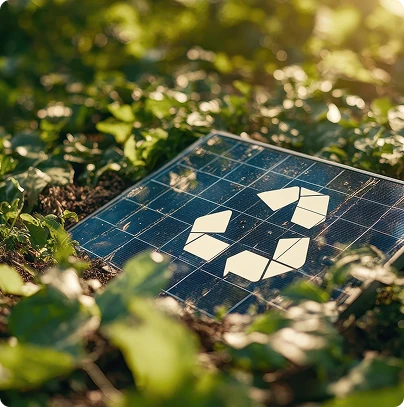
“By weight, most solar panels are around 80 percent glass and aluminum which are easy components to recycle at general-purpose recycling centers. Solar panels also contain at least one rare or precious metal which may be recycled at the end of its useful life. Metal racking, framing, copper wire, and other equipment may offer scrap value that can offset decommissioning costs.” – CCEBA Solar Decommissioning Fact Sheet
There are no studies indicating negative health impacts from a solar project site. The compounds within solar panels – Cadmium Telluride, Silicon, and others – do not leech (or escape/leak) from panels even during extreme weather conditions that damage panels (see Virginia Tech study). Materials inside a solar panel are solid and fully encapsulated in tempered glass.
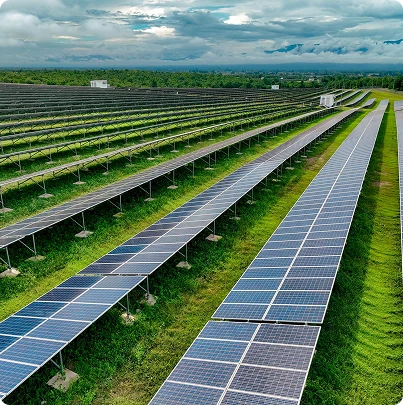
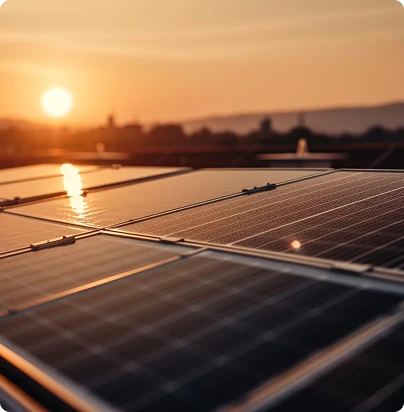
Research indicates that any heat around or immediately above a solar project quickly dissipates. With the temperature dropping after sunset, it is very unlikely a heat island could occur as the system completely cools overnight. Solar panels operate more efficiently at lower temperatures, and it is in the best interest of solar project owners to keep temperatures lower with vegetative ground cover.