|
|
|
Happy Friday!
October 23, 2026
|
|
|
|
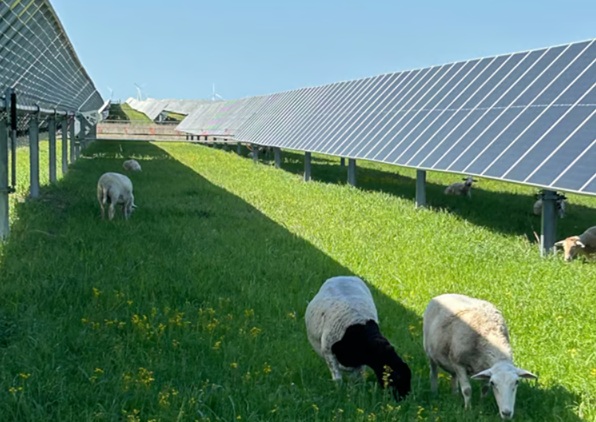
Next week in Orange County, Virginia, Energy Right will be hosting Beer, Batteries, and Bees on Thursday, October 29, from 5:30 to 7:30 p.m. at Ironpipe Alewerks. This free event brings together food, film, and conversation around renewable energy, the battery storage that goes along with it, and how energy development can work with agriculture and our natural environment.
We’ll kick things off with a screening of Pastures to Panels: The Power of Agrivoltaics, followed by a panel featuring a local beekeeper, a battery storage developer, and an environmental organization.
This event is free and open to everyone—you can RSVP here.
|
|
|
|
|
|
Energy & Land Diversification
|
 |
|
Tentative mapping of the project via the project website
|
|
|
|
As Virginia works to meet the rapidly rising energy demand, questions surrounding land use are common, particularly in regards to solar development. Typically built on farmland and forests due to the need for larger flatter tracts of land, it’s not uncommon for solar discussions to delve into larger conversations about land use and protection of natural and agricultural resources. However, this isn’t always the case for solar projects.
A newly approved project in Southwest Virginia is showcasing that other path forward. The Nature Conservancy and TerraForm Power will begin construction this November on what is known as Wildcats Solar, a 10-megawatt project on the former Indian Creek surface mine in Wise County. This project will cover 70 acres and is the first project within The Nature Conservancy’s Cumberland Forest Project. This is one of the first projects on former coal land in Central Appalachia. Brad Kreps, The Nature Conservancy’s Clinch Valley program director, explained that the site was chosen specifically because of its mining history. This option allows the land to be reused for new energy generation, building on the region’s long history of energy production.
Important to note, energy production and the use of alternative, former coal mining land, is not the only benefit of this project, but the economic benefits that will follow in Wise County. Kreps noted that jobs will be created at different stages, beginning in engineering and continuing through construction. Much like any other solar project, officials also expect a new influx of tax revenue to flow into Wise County. This project will serve ratepayers in Appalachian Power territory, and TerraForm will handle decommissioning responsibilities, helping ensure the land is restored to its current state at the end of its lifespan.
Wildcats Solar builds on earlier work in Wise County, where Mineral Gap Solar broke ground in 2021. This was the first project to be built on previously mined land. Former coal sites aren’t available in every county across the Commonwealth; however, many localities across Virginia are home to former industrial sites, closed landfills, or brownfields that could suit these projects. As local governments review project proposals, identifying these sites could help localities attract energy development while easing tension over the use of farmland and forests. This is not to say development on these farmlands and forests should be overlooked, as in many cases building solar on these lands can be beneficial for a community and a landowner who is looking to diversify their land. However, as we consider diversifying our energy portfolio, we should also consider diversifying the types of land we build on.
|
|
|
|
|
|
FROM THE ROAD
|
 |
|
|
|
On Wednesday, the Energy Right team attended a Planning Commission meeting where a new BESS ordinance was being discussed. The county voted to table the proposals and have a workshop for further discussion in November. We were able to speak with staff and officials on our educational efforts and look to be a key piece in establishing a well thought out ordinance in the coming months.
|
|
|
|
What We’re Thinking
|
 |
|
Temporary Solutions for Long Term Problems
|
 |
|
|
|
This week, Virginia Gov. Abigail Spanberger called for a six-year freeze on residential electricity rates and higher monthly customer bill credits as conditions for approving the proposed Dominion Energy and NextEra Energy merger. Spanberger is urging the State Corporation Commission to reject the deal unless the companies make these specific commitments to protect ratepayers, preserve Virginia jobs and advance the state’s energy goals. Her proposal would also increase monthly bill credits to $29 for four years and reduce the share of infrastructure costs paid by residential customers, shifting the dollars onto large energy users, like data centers. The merger remains under review by the SCC, with affordability and Virginia customers’ long-term interests at the center of the debate.
While temporary freezes and bill credits could help many Virginia families and businesses, electricity affordability is about much more than temporary solutions. Affordability starts with Virginia expanding its power supply quickly enough to meet growing demand. While consumer protections and responsible oversight are a critical component, Virginia should also focus on building the generation and infrastructure needed to keep electricity reliable and affordable over the long term. The merger should continue with a focus on affordability and ratepayer protections, while also maintaining the importance of an all-of-the-above energy strategy that prioritizes affordability, reliability, and energy security. Freezing rates may offer short-term relief, but it doesn’t fully solve the underlying problem that may persist: producing enough electricity to meet the Commonwealth’s demand. Ultimately, the best way to protect ratepayers over the long term is to marry responsible consumer protections with policies that encourage new energy development, strengthen Virginia’s energy independence, and ensure the Commonwealth can power its own economic growth.
|
|
|
|
|
|
|
|
|
|
|
|
This week, the team was in Frederick and Spotsylvania counties as well as Charlottesville.
|
|
|
|
|
|
|
|
|
|
Virginia’s rapidly growing electricity demand is forcing the Commonwealth to confront the scale of its future energy needs. The article’s analysis of Governor Spanberger’s energy plan shows that meeting our energy demand under current policies could require: 33,300 additional MW of solar, 16 new wind farms, and up to 17 small nuclear reactors by 2050.
But the challenge extends beyond generating enough electricity. Each new project brings questions about land use, local approval, transmission capacity, and community priorities. Virginia will need a diverse mix of energy resources, but success will also depend on how effectively those projects move from proposals to operation. As demand continues to rise, the Commonwealth faces an increasingly important question: how do we build the energy infrastructure we need while respecting the communities where it will be developed?
|
|
|
|
|
WHAT NEXT?
|
|
|
|
NEXT WEEK
We’ll be going to Essex County and more!
|
|
|
|
|
|
|