Happy Friday!
June 5th, 2026
This week, the Energy Right team attended a public hearing in Gloucester County on distributed solar projects and traveled to Washington, D.C., where farmers and industry partners discussed how solar energy can support agricultural viability, rural communities, and long-term energy reliability. That’s clean energy, the Right Way!
Can Virginia Keep Energy Affordable as Demand Surges?

As many Virginians continue to struggle with high electric bills, it is no surprise that affordability issues are taking center stage in conversations surrounding data centers. Electricity demand continues to surge, and policymakers have and will continue to ponder how to ensure residential customers are not left paying for the grid upgrades needed to support this growth. We have seen these discussions happen at the state-level, with Governor Spanberger supporting HB1393, a bill that directs regulators to assign electricity costs to data centers, but now the federal government is getting involved with efforts pushed by Virginia Senator Mark Warner.
New facilities are placing unprecedented demands on the electric grid and utilities are planning for additional generation, transmission lines, and substations to serve this growth, it’s no surprise legislators are looking for answers. This week, Warner announced his support for the Power for the People Act, federal legislation designed to address the cost and reliability challenges associated with data center development. The bill would explore new rate structures for large energy users, require data centers to bear a greater share of the infrastructure costs associated with their demand, and encourage investments in on-site generation and battery storage to reduce pressure on the grid.
The conversation comes at a critical moment for Virginia’s energy future. Data centers have delivered significant economic benefits to the Commonwealth, but they have also accelerated the need for new energy infrastructure. Maintaining reliable electric service while keeping rates affordable will require deep thought and an all-of-the-above energy mix. As Virginia evaluates its options, clean energy technologies such as utility-scale solar and battery storage continue to stand out as some of the quickest and most cost-effective resources available.
Compared to many conventional generation projects, solar facilities can often be developed and connected to the grid in a shorter timeframe, while battery storage can provide flexible capacity during periods of high demand. Together, these technologies can help meet growing electricity needs without exposing customers to the fuel price volatility associated with fossil generation and can quickly be deployed to provide the necessary electricity Virginia needs now and in the future. As demand from data centers continues to grow, accelerating the deployment of affordable clean energy resources may prove to be one of the most effective ways to protect ratepayers, regardless of government intervention on data center development and energy costs.
What We’re Thinking
7/10 Oppose Local AI Data Centers
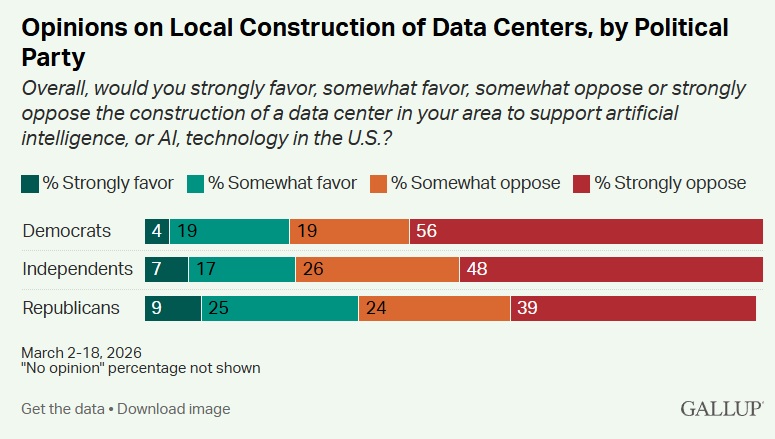
Gallup’s latest survey on artificial intelligence infrastructure reveals a significant challenge facing one of the fastest-growing sectors of the American economy: public acceptance. According to the March 2026 poll, 71% of Americans oppose the construction of AI data centers in their local communities, including nearly half who say they are strongly opposed. While AI continues to expand across nearly every sector of the economy, the facilities that power these technologies are increasingly encountering resistance at the local level.
The survey found that environmental and infrastructure impacts are the primary drivers of opposition. Respondents cited large electricity demands, water consumption, land use, noise, and potential increases in utility costs as major concerns. In contrast, supporters of data center development overwhelmingly pointed to economic benefits such as job creation, increased tax revenue, and broader economic growth. These findings mirror many of the conversations currently taking place across Virginia, where data center development has become a major land use and energy policy issue.
Recent events in Virginia illustrate that these concerns are not merely theoretical. In May, after months of community organizing and hours of public testimony, the Hanover County Board of Supervisors voted 4-3 to deny a proposed 430-acre data center campus despite projections that the project could generate approximately $900 million in tax revenue over 20 years and create roughly 1,000 construction jobs. Residents here, and across Virginia continue to cite many of the same issues identified in Gallup’s national survey, including impacts on water resources, electricity demand, noise, and community character. The outcome demonstrates that local governments are increasingly being asked to balance significant economic opportunities against questions surrounding quality of life, infrastructure capacity, and long-term community planning.
One issue that the Energy Right team continues to monitor is how public sentiment toward data centers may influence conversations surrounding battery energy storage systems (BESS). Many modern data centers utilize large battery installations to provide backup power, enhance reliability, and support increasingly complex electrical demands. As residents become more familiar with data center infrastructure, discussions about batteries, energy use, and grid impacts may begin to overlap. This could have implications beyond data center proposals themselves, potentially shaping public perceptions of standalone battery storage projects that are otherwise unrelated to data center development. For local governments evaluating future energy infrastructure proposals, understanding where these concerns intersect may become increasingly important.
Where We Went

This week, Energy Right went to Gloucester, Hanover, and Washington D.C.!
FROM THE ROAD
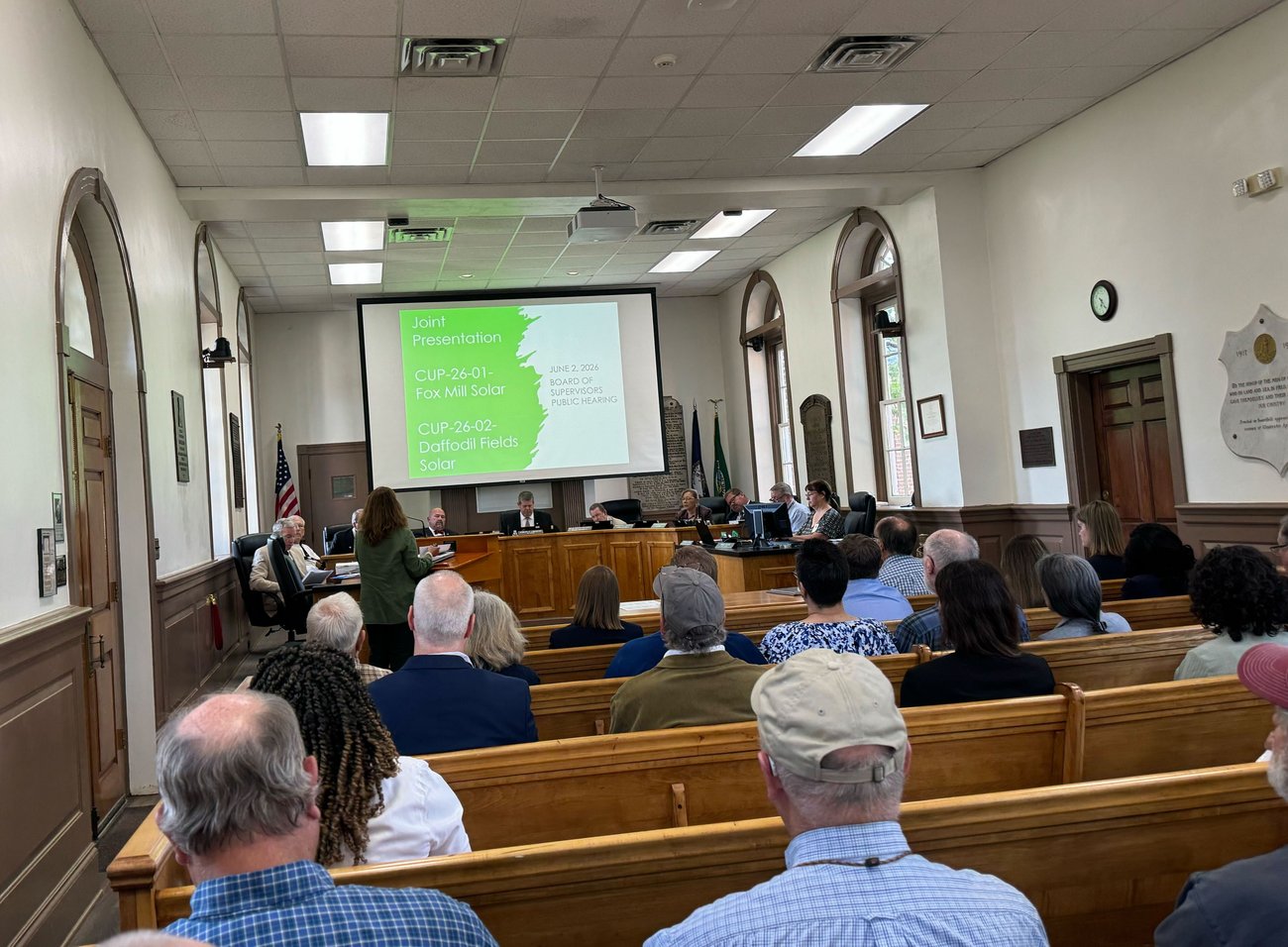
On Tuesday, the Energy Right team attended the Gloucester County Board of Supervisors meeting and participated in public hearings for two distributed solar projects. We provided an overview of the benefits of distributed solar, highlighting how these facilities connect directly to existing local distribution lines, avoiding the need for major infrastructure upgrades. This approach can reduce construction timelines, strengthen grid reliability, and helps to meet growing energy demand closer to where electricity is used.
WHAT NEXT?

NEXT WEEK
We’ll be going to Brunswick, Louisa, Stafford, and Southampton counties.
Recent News
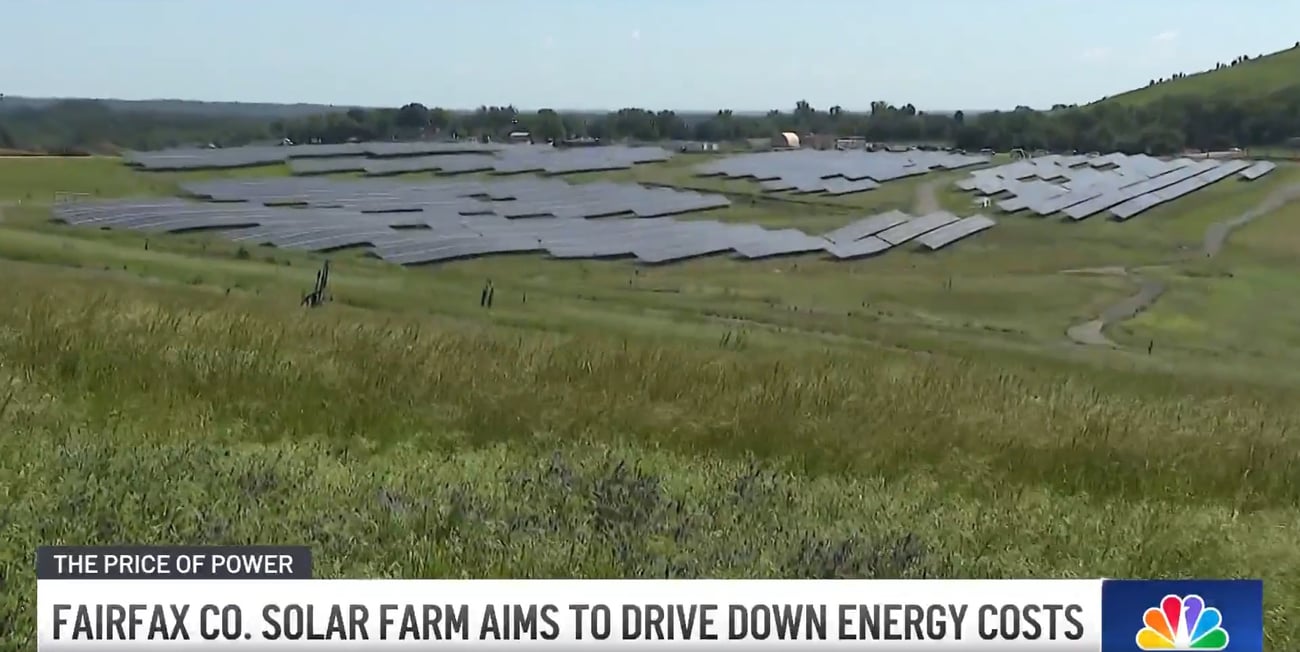
Solar farm planted on otherwise unusable Lorton landfill
– NBC Washington
A first-of-its-kind solar farm came online in Northern Virginia Thursday to provide relief for Virginia electricity customers. The renewable energy project was built on the massive Lorton landfill, land that wasn’t being used since trash was buried there 30 years ago.
Over the next 30 years, the solar farm will save Fairfax County an estimated $12 million in energy costs.
“This one project will produce about 5% of all the electricity that is used in county government operations in the county,” Fairfax County Office of Environmental Energy Coordination Director John Morrill said.
Want to keep up with Energy Right? Sign up, and forward to a friend!