|
|
|
Happy Friday!
March 6, 2026
|
|
|
|
Last month, we released our 2026 Annual Clean Energy Survey. One thing this poll told us is that Virginians are more likely to support clean energy projects that also bring a benefit to local communities; 62% are more likely to support solar projects that allow continued agricultural use—such as grazing—that protect working lands and rural livelihoods.
A stable, secure, and cost-effective energy portfolio remains key to Virginia’s bright future. Virginia can and should achieve energy independence and energy dominance with an all-of-the-above strategy. Learn more about our poll here: https://energyrightus.org/new-energy-right-poll-the-increase-in-energy-support/
|
|
|
|
|
|
Electric Power Supply Association & Public Visibility
|
 |
|
|
|
On Tuesday, the Energy Right team attended the annual summit hosted by the Electric Power Supply Association in Washington, D.C. The event brought together leaders from across the energy sector to discuss the policies, technologies, and partnerships shaping the future of power in the United States. For our team, it was a valuable opportunity to hear directly from federal regulators, regional grid operators, and major energy organizations about what they are seeing on the ground and what it will take to keep the lights on while maintaining affordability for consumers. Throughout the day, speakers emphasized that reliability and cost remain the core concerns for policymakers and the public.
Organizations such as PJM Interconnection and the Natural Resources Defense Council highlighted how energy demand continues to evolve and why coordination across the industry is becoming more important. Grid operators, developers, and advocates all acknowledged that meeting future demand will require a diverse mix of resources and smarter planning. Discussions focused not only on large-scale infrastructure and market policy, but also on how public understanding of the energy system shapes policy outcomes.
A notable theme came from PJM, which signaled a stronger interest in becoming a more visible and understandable presence in the everyday lives of electric customers. As the regional transmission organization responsible for coordinating electricity across multiple states, PJM traditionally operates behind the scenes. Leaders at the summit expressed a desire to engage more directly with communities through local initiatives and public outreach to help people better understand how the grid works, why infrastructure decisions are made, and how regional planning affects the reliability and price of electricity.
Federal regulators echoed this sentiment. Representatives connected to the Federal Energy Regulatory Commission emphasized the importance of highlighting successful energy projects of different sizes and technologies. By showcasing projects that are already delivering benefits to communities—whether through reliability improvements, economic development, or expanded generation—regulators hope to demonstrate the positive impact of energy infrastructure. FERC officials also stressed that momentum for new projects often starts locally and that community voices play an important role in shaping how energy development moves forward.
The summit also provided an opportunity to connect with representatives from other states and regional organizations, many of whom described similar challenges around permitting timelines, regulatory oversight, and balancing growing demand with responsible development. One theme consistently surfaced: education. Several groups emphasized that energy policy moves forward most effectively when citizens understand how the grid functions and what different energy sources contribute to reliability and affordability. That message closely mirrors the work we do at Energy Right, where community engagement and grassroots education remain essential to building a resilient and secure energy future.
|
|
|
 |
|
What We’re Thinking
|
|
Energy Infrastructure & Rural Questions
|
|
|
|
Virginia’s data center corridor continues expanding from Northern Virginia down the I-95 corridor. As a result, rural communities in the Northern Neck and Middle Peninsula are increasingly wary of what that growth could mean for their local resources and quality of life. In particular, concerns have emerged about the potential impacts data centers could have on local water supply in nearby rivers and tributaries, as well as the viability of existing groundwater wells.
These concerns are not new. In May of last year, County Administrator Carol Steele spoke at Rappahannock Community College to outline the potential implications of data centers being located in the county and to address many of the same community questions about water use, infrastructure demand, and long-term planning.
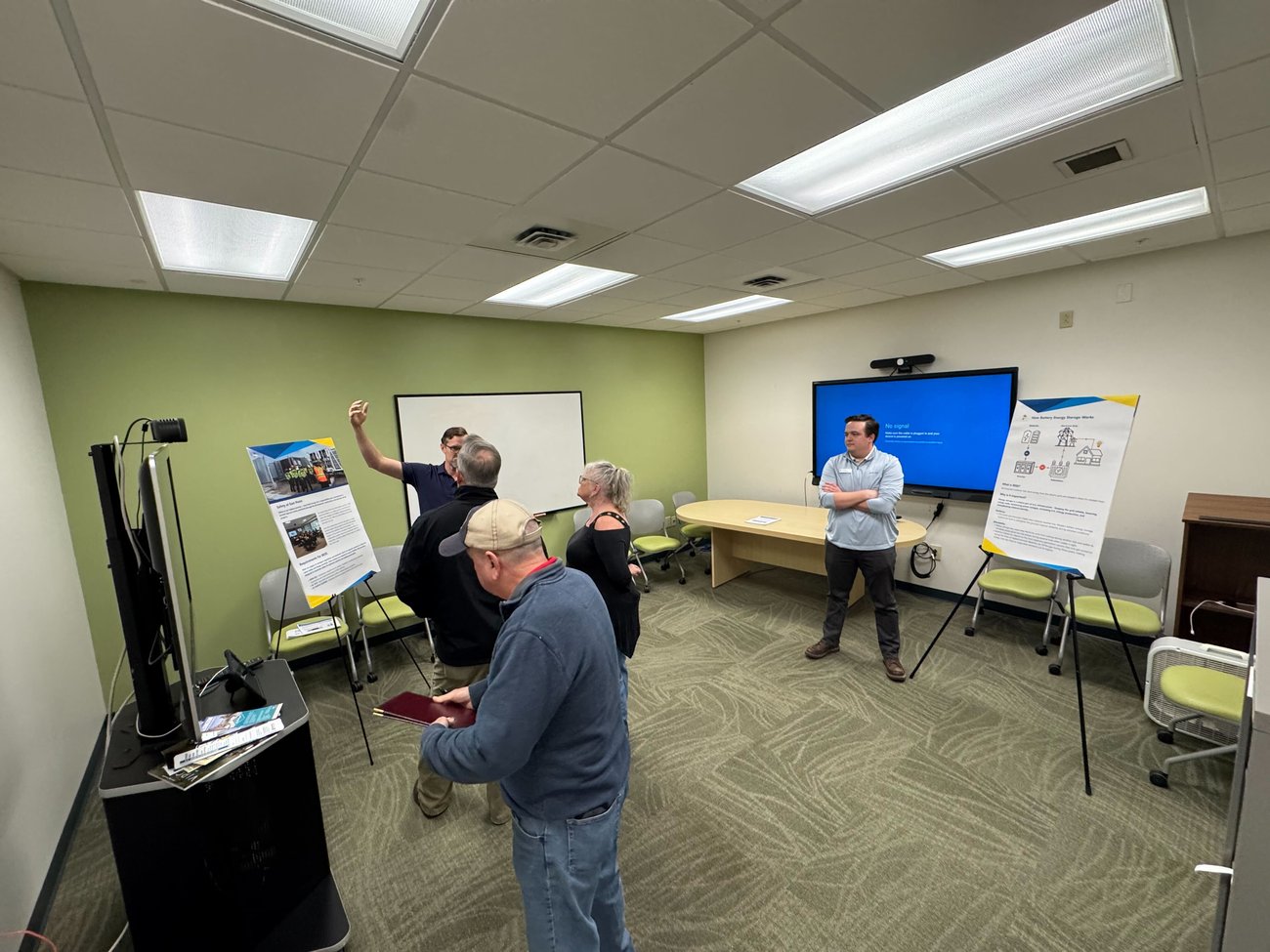
More recently, a community meeting took place for the Purple Martin Energy Facility, a 225 MW battery energy storage project planned on roughly 74 acres near an existing Dominion Energy substation and transmission corridor in the Petsworth district. Prior to the meeting, the developers were aware that some confusion about the project had circulated on the Gloucester County Facebook page, where residents raised concerns about water consumption while mistakenly describing the battery storage facility as a data center.
The Energy Right team will continue following the Purple Martin project as it moves through the local review process, including upcoming hearings before the Gloucester County Planning Commission and Board of Supervisors.
.
|
|
|
|
|
|
|
|
|
|
|
|
|
|
This week the Energy Right team was in Gloucester, Sussex, and Washington D.C.!
|
|
|
|
|
|
|
|
|
|
The Energy Right team attended a community meeting at Rappahannock Community College in Gloucester County, Virginia to learn more about the proposed Purple Martin Energy Facility in the Petsworth District.
The project is a battery energy storage system planned on approximately 74 acres adjacent to a Dominion Energy substation and existing transmission corridor. If permitted, the facility would have a capacity of 225 MW and the capability to provide enough stored energy to power roughly 168,000 homes for up to four hours during an energy outage or grid
|
|
|
|
|
|
|
|
NEXT WEEK
We’ll be heading out to Botetourt, Culpeper, and New Kent counties.
|
|
|
|
|
|
|
|
|
|
The U.S. added 50.3 gigawatts of new utility-scale solar, wind, and battery storage capacity in 2025, marking the first year clean power installations surpassed the 50-GW threshold. Battery storage led the growth with more than 16 GW added—up 41% from 2024—while the three technologies together accounted for over 90% of new electricity capacity. Despite the record year, industry analysts warn that declining power purchase agreements and policy uncertainty could slow deployments later in the decade.
|
|
|
|
|